| |
I won't swap official releases with you unless for some reason you are unable to find them through normal means (if they're not on Amazon.com, for instance). They are organized by type/media and then (mostly) chronologically within that category. This page catalogues my officially released video material; for bootleg videos, click on one of the two video pages above. As always, see anything you like, email me. All boots are on Audio CD-R unless I say otherwise. Click on the text links below to scroll directly to the entry you're interested in. | | | | Page Summary and Menu We Know What We Like: The Music of Genesis, London Symphony Orchestra, 1987 Musical Productions by Dennis Lengel, 1992-1995 Giraffe: The Lamb Lies Down on Broadway - Live at Progfest '94, 5/11/94 (Variety Arts Center, Los Angeles CA) Supper's Ready, various artists (Magna Carta), 1995 The River of Constant Change, various artists (Mellow Records), 1995 The Fox Lies Down, various artists (Purple Pyramid), 1998 Genesis For Two Grand Pianos, Yngve Guddal & Roger Matte, 2002 Genesis For Two Grand Pianos (Vol. 2), Yngve Guddal & Roger Matte, 2005 The Musical Box Promo CD, 2002 | | | 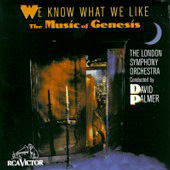 | We Know What We Like: The Music of Genesis (London Symphony Orchestra)
(1987) | | | | | 01 Guide Vocal/Turn It on Again (5:49)
02 Mad Mad Moon (9:08)
03 Entangled (5:16)
04 Medley: Los Jigos - Duke's Travels/Fountain Of Salmacis/The Knife/Unquiet Slumbers.../Los Jigos (3:48)
05 Follow You, Follow Me (4:12)
06 I Know What I Like (3:50)
07 Medley: Snowbound - Snowbound/Scenes From a Night's Dream/ Say It's Alright Joe (11:03)
08 Horizons (2:41)
09 Can-Utility and the Coastliners (5:48)
10 Undertow/Supper's Ready (6:13) Type/Quality: CD/Excellent Comments: This CD is becoming scarce and I am willing to consider it a tradeable item. One might think that Genesis' brand of complex, layered, classically influenced music was made for reinterpretation in orchestral form--until listening to this album. OK, so it's not really that bad. Some of the songs work quite well, especially medleys like "Los Jigos" and tracks with strong, atmospheric instrumental passages like "Mad Man Moon" and "Entangled" (although just when this version of "Entangled" gets to the best part of the song--the hypnotically beautiful ending melody--it fades out!), but the majority of the pop songs converted here just don't work. "Follow You Follow Me" sounds cheesier than the original, and "I Know What I Like" is a disaster but for the flute solo at the end (by Ian Anderson of Jethro Tull!), because while the spoken parts of the song are OK, the singing part only seems to be sung for the first verse, mixed way back, while a loud, awful-sounding and intrusive "wah wah" guitar mimics the vocals. Another song with vocal problems is "Follow You," which remains instrumental until the very ending, when the same singer from "I Know" starts murmuring the repeated chorus, so low and strangely that at first I mistook him for some kind of cello. "Turn It on Again" was a rock song and can't be anything else; you can't just replace a guitar or a vocal line with a bank of strings or a horn and expect it to work as well (Genesis learned this lesson on their first record). I don't know, maybe I'm just so used to hearing the vocals on the songs that it really bugs me to hear them converted to instrumental passages; the bits I seemed to like best on here were the instrumental bits that were instrumental to begin with! It is interesting to hear a boys' choir (from the Genesis breeding ground of Charterhouse School) sing the line "take what's yours and be damned" at the end of "Guide Vocal"--a song which is linked to "Turn It" by the theme from "Dance on a Volcano," interestingly enough. The choir is also featured on the last track, where they succeed in totally sucking the life out of the lyrics to "Undertow"--it's very hard to insert emotion and nuance into your singing when you're trying to sing in exact harmony with a bunch of other little boys. Then they drop in the line "and the lamb lies down on Broadway" before moving into the closing section from "Supper's Ready" ("As Sure as Eggs is Eggs (Aching Men's Feet)"). One definite highlight is "Horizons," featuring Steve Hackett on guitar. This track breaks into a pretty section from the opening of "Blood on the Rooftops" in the middle, played on strings. I think the main problem on a lot of these tracks was simply the choice of songs--why not more of the longer, more obviously classical tunes like "The Muscial Box" or "White Mountain" or "Stagnation," or even (Tony's favorite) "After the Ordeal," instead of pop songs like "Follow You"? Still, the choice of songs to stick together for the medleys was very creative and made possible some interesting interpretations on the originals. The "Snowbound" medley intertwines between songs quite effortlessly, although it seems like in the beginning and ending they slip into a Moody Blues tribute--at any moment I expected to hear a voice start saying, "cold-hearted orb that rules the night..." | | | |
Musical Productions
by Dennis Lengel (1992-1995)
1 Stagnation (10:19)
2 I Know What I Like (in Your Wardrobe) (6:31)
3 Back in NYC (6:05)
4 Mad Man Moon (7:45)
5 A Trick of the Tail (5:35)
6 Every Breath You Take/Afterglow (10:43)
7 Domino/Supper's Ready (ending)(13:56)
8 Way of the World (7:02)
9 Secret World (9:42)
Type/Quality: Studio/Very Good Comments: Another fascinating addition to my Genesis-related catalogue. This is a collection of amateur recordings made solely by Dennis, a fellow trader and musician. He has painstakingly put together instrumental adaptations of all the songs listed above, layering the different parts of the songs by using the technique of "bouncing." This disc is simply a sampling of the many songs he recorded in the period of 1992-1995. They are impressive for their accuracy and their attention to detail (two things characteristic of Dennis). Also of note are the two creative medleys on the disc, one linking the Police song (which Genesis did actually play before in one version of their "Turn It on Again" medley of 1984) with "Afterglow," the other nicely connecting "Domino" with "Supper's Ready" (I would like to hear the band do this one). Also to conclude the disc is a nice, well-played cover of Gabriel's "Secret World." These songs are played mainly on the keyboard using various tone settings, but there is some guitar in there as well (Dennis learned both instruments). The melody/vocal lines are reproduced with the keyboard. A unique entry in my list of tribute albums. Back to top | |
Giraffe
The Lamb Lies Down on Broadway
Live at Progfest '94
5/11/94 01 Introduction (0:55)
02 The Lamb Lies Down on Broadway (5:12)
03 Fly on a Windshield (1:21)
04 Fly on a Windshield/Broadway Melody of 1974 (3:23)
05 In the Cage (9:11)
06 The Grand Parade of Lifeless Packaging (2:54)
07 The Story of Rael (1:12)
08 Back in NYC (5:51)
09 Intro (0:26)
10 The Carpet Crawlers (6:18)
11 Lilywhite Lilith (2:54)
12 The Story of Rael (1:43)
13 The Lamia (7:52)
14 The Colony of Slippermen (6:29)
15 Ravine (1:00)
16 In the Rapids (2:21)
17 It (4:40)
18 Watcher of the Skies (instrumental)(3:52)
19 Intro: Box (1:35)
20 The Musical Box (6:53) Type/Quality: Soundboard/Excellent Comments: The title fairly well describes what we have here: prog rock band Giraffe, headed by Kevin Gilbert, got on stage at Progfest '94 and performed an edited-down version of The Lamb Lies Down on Broadway, and this is a recording of that performance from the board. The sound is incredible and the performance is energetic and very enjoyable. I also have this entire show on DVD! If you watch the DVD you can see the introduction, in which a Rael-clad Kevin listens to a radio station begin to play "Invisible Touch." He walks to the side of the stage and chucks the radio into a garbage can, then takes a pole and violently crushes the radio into bits as the keyboardist begins playing the opening notes of "The Lamb." Hilarious! It's interesting to look at the songs the band chose to perform and those they omitted. I missed the loss of "Counting Out Time" and "32 Doors," though I suppose the line had to be drawn somewhere (in one of his intros Kevin humorously interjects, "It was at this point in the story that Rael skipped the next three songs due to time considerations"). The "Arrival" improv at the beginning of "Slippermen" has also been omitted. Kevin's stories are surprisingly close to the real thing, though he does not always sing quite the right words. The band was unable to get exactly the same instruments or sound as the original but I thought did a remarkable job with what they had. I loved the way they segued into "Watcher" after "It," a la Genesis in 1976; I don't think "It" really did such a great job as a concluding number for the album, so to hear them rip viciously into the closing of "Watcher" is incredibly satisfying. Kevin makes a humorous lyric change in "It": "If you think that it's pretentious, wait for Progfest '95!" After the main show the band is introduced and Kevin tells the old croquet story for "Musical Box." Unfortunately the band are forced to play a majorly edited version of the song with a lot of the middle cut out, but what's there sounds great. Back to top | | | 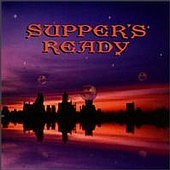 | Supper's Ready
(1995) | | | | | 01 Watcher of the Skies (6:50) Robert Berry and Hush
02 Firth of Fifth (9:25) Over the Garden Wall
03 Undertow (4:42) David Hentschel with Jay Tausig
04 Ripples (4:48) Annie Haslam
05 Back in N.Y.C. (6:37) Kevin Gilbert
06 For Absent Friends (3:11) Richard Sinclair
07 Mama (6:51) Magellan
08 Man of Our Times (5:37) Enchant
09 Many Too Many (2:58) Pete Bardens "Mirage"
10 Entangled (6:18) Shadow Gallery
11 Squonk (6:28) Cairo
12 I Know What I Like (in Your Wardrobe) (4:04) Crack the Sky
13 Carpet Crawlers (5:24) John Goodsall with Michael Zentner
14 Keep It Dark (4:06) World Trade Type/Quality: CD/Excellent Comments: As of this writing, this CD is officially available. When a bunch of artists get together to cover Genesis tunes, it seems that you can count on two things: that you probably won't have heard of most of the bands, and that they'll probably pick some interesting songs to cover. Some of the tracks on here are pretty obvious covers to do--"Carpet Crawlers" in particular, a song that never ceases to be done over and over again, and which appears on both this CD and the next two tribute CDs--but others are somewhat "forgotten" songs that didn't get any radio play or even any live play by the band, like "Man of Our Times" and "For Absent Friends" and "Many Too Many." There is a nearly even ratio of more contemporary, pop-oriented tracks like "Mama" to older, progressive songs like "Firth of Fifth." The songs represented cover a range of years from 1971-1983. Some of the bands here are recognizable to me. Over the Garden Wall is one of the more famous Genesis tribute bands. David Hentschel produced a few Genesis records and even sang back-up vocals on Duke somewhere, but I was not aware that he was a practicing musician until I saw him on this CD. Annie Haslam is the lead singer from the band Renaissance, a wonderful prog/classical band who I recommend to fans of early Genesis. Kevin Gilbert was the lead singer for Giraffe (see above entry for more of their tributes to Genesis). John Goodsall is one of the core members of Brand X. Some highlights (for me) from this CD are "Firth of Fifth," as it is nearly a note for note copy of the original; "Back in N.Y.C.," which builds up to the aggression of the original and also includes an excellent saxophone solo at the end--really a great cover of one of my favorite Genesis songs; "Man of Our Times," which I just think was done well, and that more people should pay attention to this song; and on "Carpet Crawlers" there is some impressive guitar playing. Some lowlights: the absolutely horrific cover of "Watcher," with a vocalist who sounds like he's trying to imitate Bob Seger. Also the vocalist on "Mama" really doesn't have the raw emotion and anger to sing the song the way it should be sung (the famous Grandmaster Flash laugh sounds badly faked as well). The "I Know What I Like" cover doesn't do anything for me, as the instrumentation seems to have been reduced to a drum machine program, and not much else. | | | | | 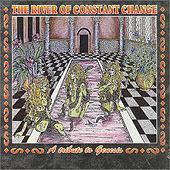 | The River of Constant Change
(1995) | | | 1-01 Dusk (6:37) Algebra
1-02 Can-Utility and the Coastliners (5:33) Decode
1-03 The Carpet Crawlers (6:27) Notturno Concertante
1-04 Living Forever (4:46) Moongarden
1-05 Time Table (5:19) Lincoln Veronese
1-06 Blood on the Rooftops (5:18) Queen of Maybe
1-07 Lilywhite Lilith (3:40) Art and Illusion
1-08 Harlequin (3:09) Finisterre
1-09 Ravine (3:50) T.M.A.
1-10 The Day the Light Went Out (5:32) Legend
1-11 A Place to Call My Own/Am I Very Wrong? (4:47) Nostalgia
1-12 Twilight Alehouse (5:20) Men of Lake
1-13 The Knife (7:25) Germinale
1-14 The Lamia (7:15) The Ancient Veil 2-01 Horizons (1:56) Max Michieletto
2-02 Looking For Someone (4:28) Graziano Romani
2-03 The Light Dies Down on Broadway (4:40) Dracma
2-04 Entangled (6:38) Submarine Silence
2-05 Watcher of the Skies (7:51) Seconds Out
2-06 Hairless Heart (5:25) Mysia
2-07 Dancing With the Moonlit Knight (7:56) Mirage
2-08 White Mountain (7:06) Evolution
2-09 No Son of Mine (7:30) Final Conflict
2-10 In the Rapids (3:10) Irrgarten
2-11 Wot Gorilla? (3:22) Paul Ward
2-12 Afterglow (4:22) Unicorn
2-13 The Chamber of 32 Doors (5:19) Galahad Type/Quality: CD/Excellent Comments: I have a rule about official releases, and that is that if they are still easily available for purchase at Amazon.com or a local CD store, I do not trade them or accept them from other people as trades. With this tribute album, probably the last tribute album I will acquire, I sort of bent that rule (as I find myself doing fairly often with all of my trading rules). This set is listed on Amazon, but it is only available as a used item. I seem to remember having seen it at a Tower Records store in Philadelphia once, but it could be that it is no longer officially available. Based on this evidence, I chose to take a copy of it from a trader, and if asked, I will probably agree to copy it for you. The trader I got it from was nice enough to duplicate every part of the artwork and insert from the original, including the disc surfaces, all pages of both of the booklets provided (there was one booklet for each disc, since it seems to have come packaged in two separate cases), and the cover and such. My covers (there are two, one for each disc booklet) do not match the art placed above, which is the cover displayed on Amazon, and which actually is the art for the overall slipcover that encases the whole thing (thought they were quite fancy, didn't they?)--a rather crude and slightly inaccurate depiction of the Lamia (don't worry, there are more crude colored pencil drawings on the inside of the booklets as well). If you do visit the entry for this set on Amazon, you'll see an identical track list to the one I have listed above. You will also see (probably) my own review of the CDs and my Amazon rating of three out of five stars for this album. Mine is the only review posted. Reading that review will be basically the same as reading what I am about to write, but they are not quite the same and the comments below are more detailed and will go song by song, in aching scrutiny. It was when I began to look at the pages of the booklets that the trader had sent me that I began to realize just what this album is, and what many of the Genesis tribute albums I have are: advertisements for record label talent. Yes, many of these bands show that they are very familiar with Genesis, choosing some obscure and even non-album tracks from the band's history and sometimes mixing in snatches from other Genesis tunes in their covers. It could very well be true that they are all huge Genesis fans, and were really excited about this project. But the inescapable reason why this project got off the ground is because Mellow Records, the label involved, knew that their obscure European bands would get wider exposure if they lured a bunch of desperate Genesis fans into buying a record of covers accompanied by each band's resume/discography (this is what fills up the two CD booklets). A quick sampling of the bands involved begins to reveal the fact that the great majority are from Italy, along with a few Swedish, French-Canadian, British, Spanish, and German groups: Notturno Concertante, Lincoln Vernese, Germinale, Max Michieletto, Graziano Romani, Dracma, Irrgarten (also the booklets have contact information for every group, showing the country of origin and most often pointing to an address on some "via" in Milano, Genova, or Pisa). An even bigger clue is provided by listening to the lead singers, who almost invariably sport heavy accents from various European countries, singing "the" like "duh" and "with" like "weeeth." (I sound like such a closed-minded American, don't I? I'm really not prejudiced, honest--it just sounds weird to me to hear vocalists with accents!) It was more than a little unnerving to hear Genesis songs with these kind of vocals on them--though there is the admitted uniqueness of being able to hear a Genesis song sung with a Swedish accent ("Afterglow"). Needless to say, unlike Supper's Ready or The Fox Lies Down (below), where I was able to identify one or two groups or individuals on each disc, this album is full of unknowns. The only exception is Seconds Out, a German Genesis tribute band who I had heard of before, though never actually heard (I was not particularly impressed by their by-the-numbers live cover of "Watcher of the Skies" included here; The Muscial Box does it better). Mellow Records also seems to have gotten hold of another strongly Genesis-influenced band in Queen of Maybe, who provide a very enjoyable though not particularly original cover of "Blood on the Rooftops." One of the nice things about the album, as I said before, is that an interesting spread of songs has been chosen by the groups involved. The great majority of songs are from the Peter Gabriel era, though there are also quite a few songs from the four-man period of '76-'77, as well as a very odd choice of a '78 b-side ("The Day the Light Went Out") and the nearly anachronistic inclusion of two songs from the '91 We Can't Dance album (which at the time of this album's release was the last Genesis album). This puts the spread of years for songs chosen as '69-'78--and '91, thereby ignoring the fact that the '80s even existed. True, some of the songs are fairly typical for a tribute album: "Carpet Crawlers," which is featured on Supper's Ready and Fox Lies Down, "The Knife," which though it is not featured on those other tribute albums seems an obvious choice for an anthemic Genesis tune, "Watcher of the Skies," "Dancing With the Moonlit Knight," "Afterglow." Strangely, "Firth of Fifth," a Genesis live staple covered on other tribute albums and the song from which this album gets its name, is not featured (except in one tiny flute passage in the cover of "Knife"--see my description later). But there are also some unique choices of songs to play: "Living Forever," "Time Table" (though I don't see why you'd want to cover this one), "Harlequin," "Ravine" (!), "The Day the Light Went Out," two songs from the first Genesis album, "Hairless Heart," "In the Rapids," "Wot Gorilla." I take my hat off to bands willing to delve into these more obscure samplings of Genesis songcrafting. However, I do feel that while some of these songs are given new life with interesting arrangements and clever changes, many of the other covers are unimaginative and also played by bands who simply do not have the level of musical ability necessary to exploit the latent beauty in the music. Now that I've filled up all this space with "general" comments, let's run through the album song by song and take up even more room on this web page. "Dusk" has an interesting opening that is not like the original, and also boasts (of all things) a saxophone solo in the bridge. "Can-Utility" is a pretty standard cover; the vocals seem rather low in the mix, and I probably prefer the version by Brand X II which is on the next entry. "Carpet Crawlers" is another pretty average cover; I have yet to hear a really good cover of this song, unless you count the '99 remix. "Living Forever," one of the few cuts off the WCD album that was not played live and was never really a huge hit, is given a slightly different treatment here that is at least worth a listen. I am not a huge fan of the song "Time Table," so that colors my perception of this cover; I suppose it's all right, heavy Italian accent and all, but I'm not sure there's any value in trying to resurrect this song. "Blood on the Rooftops" on the other hand is one of my favorite Genesis tunes, and I think that while Queen of Maybe's rendition doesn't have any new surprises to offer, it is still a good performance by a bunch of guys who fully understand the original. "Lilywhite Lilith" doesn't do anything very new; the only interesting thing is how they chose to deal with the ending of the song, which originally segued into "Waiting Room." Here the vocalist repeats the first verse of the song instead, bringing it full circle. "Harlequin" doesn't really do much for me; I like the vocal harmonies on the original and Finisterre doesn't do them quite like that, though they are technically proficient. "Ravine" is probably one of my favorite covers on here; it has all that I really ask for in a Genesis cover. It stays true to the atmosphere and tone of the original while taking some creative liberties (including the addition of a saxophone again, as in "Dusk"): the result is a very nice song, all the more surprising coming from a number which in its original form is almost entirely a bridge between two more important numbers and seems almost like an instrumental afterthought. By covering this song, the band T.M.A. make you look at it out of context and realize that it really is a composition in its own right and worth listening to. Another interesting cover, at least in the fact that it was covered at all, follows "Ravine": "The Day the Light Went Out." The performance itself seems fairly close to the original, except for having a tacked-on, meditative instrumental opening. The main difference, and what really gives the cover a different sound and an intriguing appeal, is the operatic-style female vocals. I never thought much of this song before, but hearing it sung by Legend's Debbie Chapman gave me a new appreciation for it. Next comes a curious double cover of two tunes from the band's first album. I wouldn't think that most bands would want to touch material from this album with a ten foot pole, regardless of all of Jonathan King's self-serving mumbo jumbo about how if any of the songs were covered today they would be big hits--but in fact I have to admit that Nostalgia does a good job with these two songs, and that another cut from FGtR, "In the Beginning," is covered on the next tribute album. In the case of "A Place to Call My Own" and "Am I Very Wrong," the accented vocals (Nostalgia is one of the many Italian bands of Mellow Records) actually seem to lend an air of maturity and depth of feeling to the usually naive lyrics--especially in "Am I Very Wrong," where I had previously always found the "it's your birthday friend" refrain quite embarrassing. It really is nice to hear songs from the first album performed by musicians more experienced than Genesis were in 1969--meaning almost any musicians! As the first disc draws to a close we are treated to a pair of Genesis' heavier, older numbers: first "Twilight Alehouse" by Men of Lake and then, in what is actually a gutsy choice, "The Knife" by Germinale. Twilight Alehouse, though it does have some interesting jazzy-sounding interludes between verses, is generally far inferior to the original, which is so effective at building up a powerful, moody darkness. Men of Lake manage to bury that mood with inferior keyboards and weak guitars. The vocal timing seems to have changed on the build-up to the chorus ("I will now receive my comfort" is sung too slow), and the conclusion of the song is pitiful compared to the jarring pandemonium of the Genesis version. "The Knife" also greatly lacks in aggression, especially in the drum department but also in an utter lack of a good guitar solo, which is really almost two thirds of what makes this song as classic a Genesis live closer as it is. It was gutsy to take on "The Knife," because you have to be a really strong rock band with an excellent guitarist and an excellent flautist to do it right, and while Germinale have the flute, they don't have the guitar. The only interesting bit here is the strange interlude which on the original was filled with militant sound bytes like "OK men, fire over their heads!" and "Things got a little out of control here today." In the Germinale version, a male voice speaks to a woman named "Suzy Cream Cheese," claiming he is her conscience and asking her what the heck she thinks she's doing. It's very odd and has nothing to do with the song whatsoever, but it's kind of funny nonetheless. Also during the flute solo you can here a bit from the "Firth of Fifth" instrumental bridge tossed in there--the only place where that song appears on the album. Ending the first disc is a real winner, the one song on this album which may be worth owning the whole thing. For most of the song, The Ancient Veil's cover of "Lamia" is pretty standard, with the interesting addition of some strings being the only thing adding originality to a faithful cover (though the band seems to be heavily Italian, the vocalist sounds to me like he has a very heavy French accent, which may or may not add to the song). But when the song kicks into the instrumental conclusion, then we really hear something. Instead of the guitar solo of the original, we are treated to a flute and tabla solo which is truly awesome. Very cool stuff. On to the next disc in what has already become a marathon review! "Horizons" I would expected to have been a note for note cover, showcasing the guitarist's ability to copy Steve Hackett's proficiency. But instead, Max Michieletto actually does do some messing around to the song, changing the tempo and seemingly adding some flourishes of his own--an interesting cover. "Looking For Someone" somewhat reminds me of the cover of "Watcher of the Skies" on the previous disc, in that in both cases I think the vocalist does a terrible job and pretty much ruins the song. The vocalist has a hybrid sound of Bob Seger/Joe Cocker/Eddie Vedder and has a way of emphasizing lines by repetition that is very annoying. The singer for "Light Dies Down" is not half as bad, though he does have what I guess is a very heavy Spanish accent (brother "John" comes out sounding like "Joan"--did Rael have a sister, too?). At the beginning we get a little bit of "Silent Sorrow in Empty Boats" before the real tune begins; at the end of the song, instead of the usual (and in this case unuseable) segue to "Riding the Scree," the band use the refrain from the end of "The Lamb Lies Down on Broadway." "Entangled," unlike other covers on here, is strictly instrumental, with the vocal line replaced by keyboards. The ending solo uses strings instead of the "Maria Callas-style" keyboards of the original. It's quite a nice cover--this one always seems to do well when covered instrumentally. "Watcher of the Skies," the next song, is taken from a Seconds Out live performance and has some crowd cheering in it. It's a faithful cover, with nothing new, and while I suppose it's laudable for its faithful qualities, the vocalist is somewhat whiny and raspy. "Hairless Heart," "Moonlit Knight" and "White Mountain," the next three numbers, aren't bad, but don't do anything special either. There are quite a few guitar solos in "Moonlit Knight," but it is probably the weakest cover of the three. The impressive thing about "White Mountain" is that it seems to have been performed totally by one man--yes, the band's name is Evolution, but according to the booklet the line-up consists of one Ken Senior, and only Ken Senior. Then we have the other song from WCD, "No Son of Mine." This is one of the more popular songs from that album, and one of Phil's better lyric efforts, but this cover makes it sound like a below average pop song. Final Conflict, the band attempting the cover, are not able to reproduce Tony's "elephant" sample at all, and the song lacks the emotional power of the original. "In the Rapids," one of my favorites from the Lamb album, gets a similarly uninteresting treatment. "Wot Gorilla?" is much more interesting, as it becomes almost a medley. It features the opening from "Eleventh Earl of Mar" and a very small section of "In That Quiet Earth," in addition to a fairly nice rendition of the "Gorilla" itself. "Afterglow," a Genesis live staple that any band must have balls to think they can do better, is predictably not done very well by Unicorn, though they do contribute some guitar bits to the end of the song which were not in the original. Ending the album is Galahad's fairly uninteresting cover of "Chamber of 32 Doors," bringing the songs from The Lamb Lies Down on Broadway featured here to eight--by far the greatest number from any Genesis album represented. Trespass and Foxtrot however tie for highest percentage of songs represented, since each album has six tracks and four from each are on here ("Visions of Angels," "Stagnation," "Get 'em Out by Friday," and quite obviously "Supper's Ready" are the songs not taken from those albums). It's pretty surprising that three of the band's more famous prog efforts, Nursery Cryme, Selling England by the Pound, and A Trick of the Tail, remain nearly untouched, with only one song taken from each. There are several songs from 1977's Wind and Wuthering, however. In conclusion to this monstrous review, I'd say that there are some interesting choices of songs and some creative covers here, but the bands are unknowns and some of them could have done a better job (and a few of them don't seem to get the lyrics quite right either). A lot of the covers are not particularly original and, while faithful to the originals, lack their power. Let's face it, I'm a huge Genesis fan, and if you're going to cover my favorite band, you're going to have to do something more interesting than just reproduce the notes to really gain my admiration; because, with very few exceptions, Genesis will always have done it better. I also found the heavy European accents hard to get used to. Still, there's also some nice musicianship on here (remember what I said about "Lamia"), and some of these songs are worth a listen. Back to top | | | 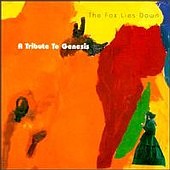 | The Fox Lies Down
A Tribute to Genesis
(1998) | | | | | 01 Can Utility and the Coastliners (3:42) Brand X II
02 Carpet Crawlers (4:57) John Ford of the Strawbs
03 Los Endos (6:02) Patrick Moraz & Ronnie Ciago
04 Your Own Special Way (4:24) John Wetton
05 In the Beginning (5:01) Mother Gong
06 Visions of Angels (6:59) Daevid Allen & Solid Space
07 Return of the Giant Hogweed (5:10) Spirits Burning
08 Dancing With the Moonlit Knight (5:40) Darxtar
09 Cinema Show (7:02) The Flower Kings
10 Broadway Melody of 1974 (6:02) Controlled Bleeding
11 The Waiting Room (6:57) Architectural Metaphor Type/Quality: CD/Excellent Comments: This CD used to be officially available but is becoming harder to get (however, for some reason I have difficulty copying it). Another bunch of rather obscure artists compile their Genesis covers. This batch is a deal more adventurous musically than Supper's Ready, both in choice of songs and in their interpretations of them (the album cover is a good reflection of this). You'll notice that all of Genesis' albums from 1969-1977 are represented by at least one track, but the songs never get as contemporary as even ...And Then There Were Three... Some particularly weird ones: "In the Beginning," the only cover I've heard of a track from the first album (no longer true--see River of Constant Change, above), is a total departure from the original. There are all sorts of howling and interesting sound effects, storm noises, and a sort of techno beat in the background. The vocals are very ghostly and disturbing. Certainly the most interesting interpretation I've ever heard of a Genesis track--I don't find it very listenable unfortunately, though I applaud the experimentation and the choice of song. "Giant Hogweed" messes with the structure of the song, and though I believe there are no new lyrics, the original lyrics are switched around and most are omitted. Still I think it captures the spirit and mood of the original fantastically well. "Moonlit Knight" is a rather strange, mostly instrumental track that repeatedly employs a sample of Peter Gabriel saying "this is my song" near the beginning. I'm not a big fan of that bit, but the rest of the song sounds pretty cool, and at the end they break into the beginning of "Apocalypse in 9/8" before abruptly cutting off. "Cinema Show" is an excellent note for note type of cover in the spirit of Over the Garden Wall, but unfortunately the big instrumental section at the end of the song is mostly cut out--most likely due to time constraints. A particularly horrible track comes from John Wetton, sometime member of King Crimson and various supergroups and associate of Steve Hackett, who completely ruins what merit there may have been in the song "Your Own Special Way." This is a real shame, since I really liked the work Wetton did while with Crimson. In this version of "Los Endos," the "angel standing in the sun" line is dropped in favor of an actual line from "Squonk:" "all the king's horses and all the king's men could never put a smile on that face." I don't know where Brand X II came from, but this band has only one of the members from any of the formations of the original Brand X: John Goodsall--one of the few guys who appears on both this collection and Supper's Ready (above). Interestingly, another member of Brand X II is Nick D'Virgilio, who also did some drumming on the studio recordings for Calling All Stations. Goodsall is not the only repeat musician; Jay Tausig, who appeared with David Hentschel on Supper's Ready, also gets onto this disc as a producer for "Visions of Angels," which is a pretty good cover. "Broadway Melody" begins with the second half of what I consider "Fly on a Windshield," and ends with what I think is an acoustic version of the theme from "Eleventh Earl of Mar!" "The Waiting Room" is a very cool cover which (necessarily) is a jam rather than a strict copy of the Genesis album version. At its end it turns into a rocking version of the end of "Aisle of Plenty!" Since the band almost never played this chunk of "Cinema Show," I'm glad to hear that at least someone cares enough to pay attention to it. Back to top | | | 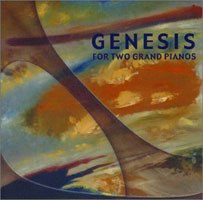 | Genesis For Two Grand Pianos
(2002) | | | 1 The Fountain of Salmacis (7:59)
2 Mad Man Moon (7:26)
3 Can-Utility and the Coastliners (5:52)
4 One For the Vine (10:48)
5 Down and Out (5:10)
6 Duke's Travels (6:22)
7 Evidence of Autumn (5:22) Type/Quality: CD/Excellent Comments: This (and the accompanying second volume; see next entry) is probably my favorite tribute album, excepting perhaps the promo disc of the tribute band Musical Box. The three actual tribute albums that I have (Supper's Ready, River of Constant Change and Fox Lies Down) are too eclectic to maintain a consistent level of quality (or, to put it another way, some of the covers stink!). The London Symphony Orchestra album, which probably comes the closest to paralleling the interpretations on this disc, I have never been very satisfied with. As I say in my review of that album, it seemed to me in theory that classical interpretations of Genesis could not go wrong, as the band's music has always been very firmly grounded in that tradition. However I felt that the Orchestra album failed in many respects, possibly due to their choice of songs and possibly due to the arrangements (from the lame vocals in IKWIL to the inappropriate school boys' choir in "Guide Vocal" and "Undertow" to the saccharine fruitiness of FYFM, to the plain cheesiness of converting rock songs to classical songs while still trying to maintain the same level of swagger and aggression). This album succeeds in almost every way, and in fact my only major complaint would be that I wanted more (though I'm sure what has been presented here took a lot of work and time--also, as mentioned before, see next entry!). Curiously, the choice of numbers on the Orchestra album and this one overlaps in a couple of places ("Mad Man Moon," "Fountain of Salmacis," "Can-Utility," "Duke's Travels"), and while the Orchestra's interpretations of at least the first two songs were fairly successful, the grand piano versions of all of them are much better to my ears. The idea of the project is very simple and can be explained simply by reading the title (though when listening to the disc it seemed to me in some places that they should have augmented the title to include 4, 5, or perhaps 6 grand pianos, as the layering of different melodies was so complex and so deep). A pair of Norwegian gentlemen (Yngve Guddal and Roger T. Matte) got together and arranged a bunch of Genesis songs to be played on grand piano. It must have been a work-intensive concept (considering the fact that Genesis' patented "wall of sound" technique was composed of a bass and lead guitar, lead and backing vocals, drums, and keyboards, and that all of these have been translated in various ways and at various times into piano) and must have required amazing technical proficiency from both men on their instruments, but the results are well worth it. The record label seems anxious to suggest that they have the band's approval and backing for this venture, as there is a very nice quote from Steve Hackett on the back of the CD and the album cover itself was painted by none other than Paul Whitehead! (Appropriately as well, they dedicate the album to Mr. Tony Banks--the band's soul and the basis and core of many of their pieces, especially those chosen for this album.) There's a message to be found in both of those things in regard to the era of Genesis that has been focused on--none of the songs on here were written later than 1980. After all, the '70s--especially the Gabriel era of the band--were the years when the band was most obviously allied with classical music. If you swap tracks two and three on the disc all the songs will be played in chronological order, and the majority are from '71-'77, when Hackett was a member of the band and they were deep in their progressive phase. A fan very familiar with all the nuances of the original songs will be amazed at how faithful the piano arrangement is, even to the smallest little touches, as well as how fantastically the pair of pianists manage to exploit and bring out the classical melodies hidden in the progressive rock. I heard songs I'd heard a million times before in a new light, as even more intelligent and refined music than I had thought they were. Interestingly, certain passages which were very strong and powerful in the original sometimes changed their tones in the piano versions to something soft and thoughtful. This is not a criticism, but shows how the musicians were able to take the original pieces and truly convert them into classical piano pieces, instead of just trying to make violins and horns sound like guitars and keyboards (as the Symphony Orchestra did). "One For the Vine" and "Mad Man Moon" show themselves to be particularly suited to the piano translation, and in fact one notices more than in the originals just how closely allied these two pieces are to each other (both, by the way, penned by Banks only). It may perhaps only be in retrospect that I say this, but it seems to me that these two songs in particular cry out for an instrumental interpretation--even the Symphony Orchestra's version of "Mad Man Moon," that painfully beautiful song (which was probably never played live by the band because of the complexly layered, rolling keyboards in the bridge section), worked well. "Salmacis" sounds amazingly well; as some might be able to predict, hearing the original song. Its drama and emotion are brought over intact and, in some places, accentuated. "Can-Utility" even comes across pretty well, though I'm not sure it would have been my first choice to convert to grand pianos. "Duke's Travels" is the only song on the album that started out as an instrumental, and thus it was easier for me (and possibly for the musicians as well) to adjust to and enjoy. Of course, I've always seen "Duke's Travels" as a very international type of song, which flows through different stylings of music. Tony's keyboard programming helped to emphasize the shifts from one style to another, whereas the grand piano does not have this luxury. I'm not sure if this makes the song lose a bit of its character in the piano interpretation, or if it helps make it more cohesive. Interesting to note that the piece is actually only "Duke's Travels," and does not include the concluding piece "Duke's End" which reprises the themes of "Behind the Lines" and "Turn It on Again." Having heard the utter failure of the London Orchestra's "Turn It on Again," I thought it was very wise of the musicians to choose not to include the theme from that song, which I think was meant to be played on guitar--and nothing else. The songs that I found most interesting as having been chosen for piano treatment are "Down and Out" and the much rarer "Evidence of Autumn," which is actually a b-side from the Duke sessions. "Down and Out" would have been one of my last choices for a conversion to classical stylings, being such a guitar-heavy song in its original form; but actually the instrumental passages of the song at the beginning and the end sound quite beautiful. The middle sounds a tad awkward to me compared to the other numbers, and I thought that this song was the only one that was not quite successful. However it is still an achievement and definitely deserves a listen. "Evidence of Autumn" is graceful and dreamlike--to my mind it took sensitive ears to realize that this song could work in this style. Work it does, in some places better than the original. I feel that this is the number that the musicians have taken the most liberty with, putting their own interpretations into the arrangement and turning it into a new and excellent tune. In fact my theory is that this was actually the first song they put together (though I'm probably wrong). In conclusion: if part of what makes you listen to Genesis is their intellectual, classical side, and if you like to think you're a smart person for having found in Genesis what others have not--then you should buy this album. I myself initially thought that this concept was too narrow a focus, too strange a concept; and that, on the basis of other tribute albums I'd heard, it would not interest me. But I'm definitely glad I decided to buy it when I chanced upon it at a Tower Records store. Beautiful music. | | | | | 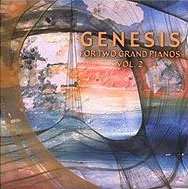 | Genesis For Two Grand Pianos (Vol. 2)
(2005) | | | 1 Me and Sarah Jane (6:33)
2 Seven Stones (4:58)
3 The Lamb Lies Down on Broadway (5:15)
4 The Battle of Epping Forest (11:09)
5 Blood on the Rooftops (5:30)
6 Eleventh Earl of Mar (7:25)
7 The Cinema Show (11:10) Type/Quality: CD/Excellent Comments: It seems that the first set of songs Guddal and Matte arranged for two grand pianos worked so well that they went back and did it again! Here is another set of seven beautiful, complex piano pieces. The set begins unusually with a swirling flourish of notes that unexpectedly (and creatively) settles into the opening rhythm of "Me and Sarah Jane," the only showing here from the 80s. All of the other songs chosen are from before Hackett left the band. In some ways, listening to instrumental covers of vocal songs gives me that disappointed feeling I get when I see a movie adaptation of a book: there's always that nagging sensation of something missing. I have to fight against that feeling so much during the vocal parts of these songs, but the instrumental sections are a wonderful relief. A great example of that was "Lamb Lies Down on Broadway." I was ecstatic during the piano introduction--it sounds so good on grand piano--but when the "vocal" part came in, it was a major letdown. There were other sections of this recording which I thought felt too layered, too complex. The Genesis wall of sound was just as complex, but the varying instruments made picking out the different layers slightly easier than here, where everything you hear is a piano. However, repeated listenings (I certainly intend to listen to this more) may help me pick out the different parts. I theorize that Mike would be happy with this at least, since I thought the bass guitar parts were nicely produced and quite audible. It was very cool to hear the guitar opening of "Rooftops" translated to piano, and of course "Cinema Show," which can probably be considered the showpiece here. (Incidentally, the song is played without the "Aisle of Plenty" section at the end.) There's really a lot of virtuosic performing on this disc, and it is definitely a worthy addition to the first collection, with some of the best Genesis covers I know about. Back to top | | | 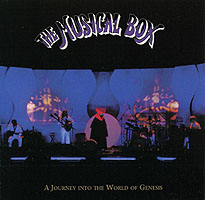 | The Musical Box Promo CD
(2002) | | | 1 Watcher of the Skies (8:43)
2 Intro: Cinema (1:57)
3 The Cinema Show (11:27)
4 Intro: Firth (1:29)
5 Firth of Fifth (9:49)
6 Intro: Box (1:28)
7 The Musical Box (11:04) Type/Quality: CD/Excellent Comments: This is a short promotional CD with recordings from the Genesis tribute band, The Musical Box. I've seen these guys a few times and I just want to say that you should, too. If you like Genesis, you have to see this band. They're based in Montreal but for the past few years they have regularly toured major cities in the US and Europe. If those places are still far away from you, I advise you to sell all your worldly possessions if that's what it takes to get you to one of their concerts. OK, I'm exaggerating, but these guys are good. Their shows are incredibly accurate and match the originals so well that it's scary. They dress like the guys, they play like them, they move like them--some of them even look like them--their stage sets are exact replicas, their equipment is the same, and I believe they use the actual slide images that Genesis used. They recreate the Foxtrot and Lamb tours, and this material comes from their most famous Selling England recreation. Definitely worth it to see them. Having said all that, I must add that this CD itself is not a particularly thrilling addition to my collection of Genesis music. Not to say that the quality isn't good--it is. Also the performances are technically proficient and very accurate--down to the introductory stories. But really the main reason I like The Musical Box is because I can go and see their live show and feel like I'm at a Genesis show. If I want to listen to Genesis music on CD, I'll pop in a Genesis album, not this disc. It's interesting to listen to these guys, and refreshing, but--no offense to them--the originals did it better. As I say, the playing is accurate, but listening to the songs without the live show to look at, I noticed that some of the music lacked the real swagger and personality of Genesis. For instance, the ending section of "Cinema Show," while exact, lacks some of the emotional power that really makes it thrilling on recordings of Genesis. Also in the realm of accuracy, I've noticed that TMB does not reproduce the very ending of "Cinema Show" as Genesis played it--instead of coming to a conclusion, they choose to fade out the song. Interesting difference, if only because I didn't notice any other differences in the pieces. "Firth of Fifth" is actually very well performed, and is probably one of the better numbers here--the piano solo at the beginning is flawless and energizing. You get the feeling that the keyboardist practiced this part the most. I believe the band have since gotten a different drummer and a different lead guitarist than those featured on this disc, but all of the incarnations of the band that I've heard do just fine. I suppose if you can't make it to see TMB and are curious as to how well they do it, this CD is worth a listen. They really are well-played versions of the songs, and don't let my description above fool you into thinking that I don't enjoy listening to this disc--I do. It's just that I think of TMB more as a live act to see (you must see them) than a "CD band." I believe the official version of this CD is normally sold at TMB concerts, however I am ashamed to say I did not pay the band any money to acquire this particular copy. My experience has been that the CDs are always sold out by the time I get to the show, anyway. I bought their T-shirt instead. I don't know of any other way to buy this disc than getting it at the concert, as it does not seem to be sold through their web site or through amazon.com, and I can't imagine its being at a CD store. I am willing to trade it to you if you want it and if you're nice, but it is a shame to not give money to the band, because they deserve it, if only as a token of appreciation for a group of guys willing to so faithfully re-create one of the best live shows I can think of. Back to top | | | |


